Over the last ten years, 806 young people under the age of 24 have been murdered with a knife or sharp object in England and Wales. Behind every number is a young life lost, a family devastated, and a community affected. For #KnifeCrimeAwarenessWeek, we want to talk about prevention: helping young people build the skills, support networks and trusted relationships they need before conflict escalates into harm.
Knife crime prevention is not only about what happens at the point of crisis. It is also about what happens much earlier – in schools, families and communities. Young people who are suspended or excluded from school are 2.5 times more likely to become involved in violence. Early support matters: helping young people manage conflict, regulate emotions and stay connected to education can play an important role in keeping them, and others, safe.
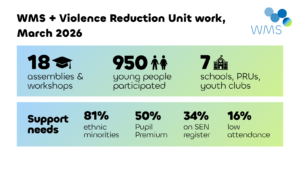
At WMS, we work directly with Violence Reduction Units, schools, PRUs and youth clubs to help young people build emotional regulation and conflict resolution skills. To create lasting change across each school and PRU community, we use a three-pronged approach:
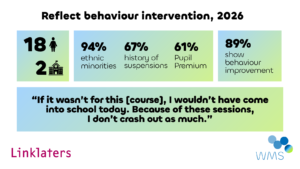
- Reflect: targeted behaviour intervention course for the most at-risk pupils. In-depth, games-based emotional regulation and conflict skills training, proven to improve behaviour.
- Anger Management Assemblies for whole year groups. Practical, drama-based assembly that helps young people manage anger, avoid flashpoints and communicate more clearly. Tagline: “Spot what’s going on. Pause. Choose your response.”
- De-escalation training for teachers and support staff. 3-hour workshop equipping staff with the skills to support young people safely and effectively, helping prevent issues before they happen.
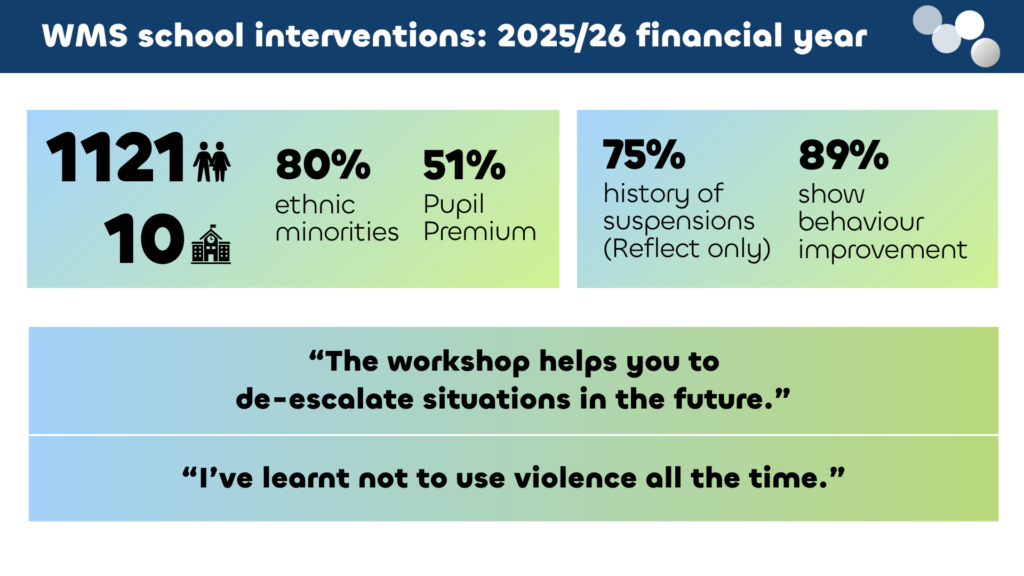
In the 2025-26 financial year, WMS worked with 1,121 young people across eight schools and two specialist settings. This was made possible through funding from Wandsworth Council’s Violence Reduction Unit, Linklaters and The Hedley Foundation. Many of the young people we worked with faced significant barriers to education and support, 80% were from ethnic minority backgrounds, 51% were eligible for Pupil Premium. For Reflect participants, 75% had previously been suspended.
The feedback shows that young people are already using the tools in everyday situations.
Mira reported getting sent out of class less often since completing the course, and feeling better able to manage her anger. She now makes an effort to step away before situations escalate and tries to calm down before speaking. She’s become more aware of how her tone of voice impacts others and is actively practising calmer, clearer communication in difficult moments. – case study from a school in Wandsworth
“I’ve learnt not to use violence all the time.”
“I’ve learned others’ triggers and how to not accidentally trigger them.”
“The workshop helps you to de-escalate situations in the future.”
Teachers also told us:
“I was very impressed with the tips students were able to recall [after the assembly]… to support them with managing their anger and avoiding potential conflict.”
Knife Crime Awareness Week reminds us that prevention is everyone’s responsibility – schools, youth services, charities, councils, parents and communities all have a role to play. It is encouraging to see so many organisations coming together to show that knife crime is not inevitable, and that early support can help young people build safer futures.
At WMS, we will continue working with schools, PRUs, youth clubs and local authorities to help young people stay engaged in education, manage conflict safely and realise their potential.
If you’re interested in bringing our violence reduction work to your school, PRU or youth setting, get in touch.